
Bolivia is evaluating the integration of Tether’s USDt (USDT) into its national payments system—a potential milestone in Latin American stablecoin adoption—as the country contends with a persistent shortage of U.S. dollars.
Economy and Public Finance Minister Jose Gabriel Espinoza announced during a press conference on Monday that the government is assessing a regulatory framework that would allow USDT to circulate “as just another currency,” alongside the boliviano and the U.S. dollar.
According to Spanish-language outlet CriptoNoticias, the proposed framework remains under review. If adopted, it would enable USDT to be used for everyday transactions—including payments, savings, and trade—without relying solely on physical cash or traditional banking infrastructure.
Any implementation, Espinoza emphasized, would require a robust regulatory structure and stringent anti-money laundering (AML) safeguards. Bolivia currently remains on the Financial Action Task Force (FATF) grey list, which flags jurisdictions under increased monitoring due to deficiencies in combating money laundering and terrorist financing.
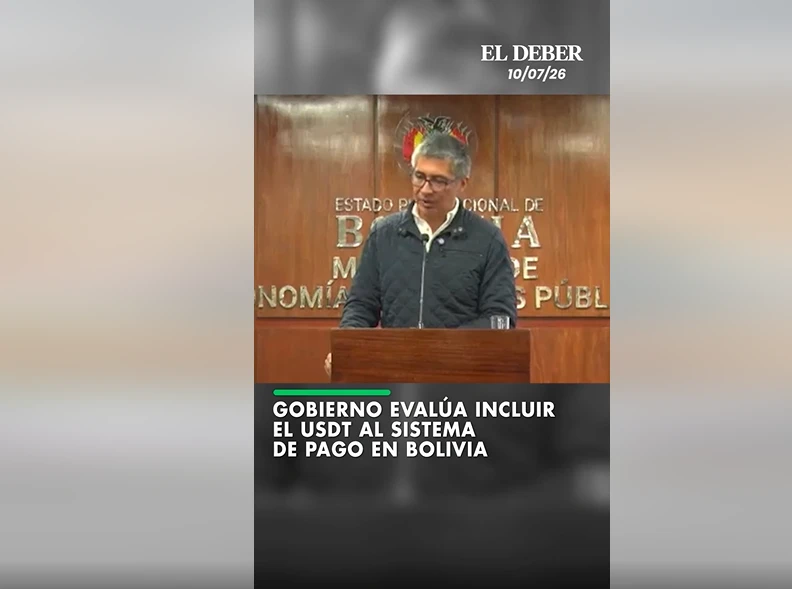

Source: EL DEBER
This proposal aligns with Bolivia’s broader shift toward digital assets following the repeal of its longstanding cryptocurrency ban in 2024. Since President Rodrigo Paz Pereira assumed office in late 2025, his administration has committed to integrating digital assets into the formal financial sector, enabling banks to offer crypto-related services—including stablecoin-denominated accounts.
USDT, the world’s largest stablecoin by market capitalization, currently exceeds $184 billion in value, according to CoinMarketCap.
Dollar Shortage Fuels Stablecoin Push
Bolivia’s move comes amid a prolonged scarcity of U.S. dollars, which have long circulated alongside the national boliviano. From 2011 until early this year, Bolivia maintained a fixed exchange rate of 6.86 bolivianos per dollar for purchases and 6.96 for sales. However, mounting pressure on foreign exchange reserves forced authorities to abandon the peg, triggering a sharp dollar shortage.
This scarcity has fueled a thriving parallel foreign exchange market, where the dollar trades at a significant premium over the official rate. The widening gap between official and black-market rates has driven demand for dollar-pegged alternatives like USDT, which are increasingly used for daily payments.
Bolivia ranked prominently in Chainalysis’ 2025 assessment of crypto adoption across Latin America, recording $14.8 billion in total transaction volume over a 12-month period.
免责声明:以上内容(如有图片或视频亦包括在内)均为平台用户上传并发布,本平台仅提供信息存储服务,对本页面内容所引致的错误、不确或遗漏,概不负任何法律责任,相关信息仅供参考。
本站尊重他人的知识产权、名誉权等法律法规所规定的合法权益!如网页中刊载的文章或图片涉及侵权,请提供相关的权利证明和身份证明发送邮件到qklwk88@163.com,本站相关工作人员将会进行核查处理回复
